Mold in Dorms: Risks, Causes, and Prevention
Key Highlights
Mold in Dorms Is Rising — and So Is Scrutiny
Aging campus housing, outdated HVAC systems, and limited resources are driving increased mold risks, and greater pressure from students and parents on IAQ transparency.
Slow Response Turns Small Issues into Big Risks
Without fast reporting systems and defined response protocols, minor moisture problems can escalate into widespread mold and reputational damage.
Proactive IAQ Strategies Prevent Costly Escalation
Universities and colleges that invest in preventive maintenance, cross-department coordination, and clear response protocols reduce mold incidents and protect student health.

8 Minute Read
Mold in dormitories is not a new issue, but it has become a far more visible challenge for colleges and universities in recent years. A combination of aging buildings, along with limited environmental health and safety (EHS) and facilities resources, and ventilation limitations in older heating, ventilating and air conditioning (HVAC) systems make campus housing more susceptible to mold growth.
At the same time, a heightened awareness of indoor air quality (IAQ) has brought greater attention to conditions within student housing. Today’s students and parents are more aware of potential health impacts like allergies, asthma, and respiratory irritants, and they expect universities to provide healthy living environments.
As a result, institutions are held to a higher standard of transparency as they face growing scrutiny from social media and campus communities. What may begin as a localized moisture issue can quickly escalate into a broader operational and reputational challenge if mold issues in campus housing are not addressed effectively.
Because mold growth in campus-housing directly impacts IAQ and occupant health, it should not be ignored nor treated as merely a maintenance issue. Even when risks are relatively low, the perception of health impacts can drive concern, complaints, and escalation, making it more than a facilities issue.
Why is Mold Common in Dorms?
There are numerous interconnected triggers and conditions that can contribute to the growth of mold in dormitories. Elevated humidity, condensation issues, water intrusion, and ventilation problems all make dormitories susceptible to mold growth.
The following are common contributors to mold growth in dormitories:
- Ventilation challenges. Older dormitories often rely on outdated HVAC systems that were not designed for modern expectations for ventilation and humidity control. Poorly balanced airflow or obstructed vents also can limit system effectiveness and impact humidity levels. In colder months, windows remain closed and reduce fresh air exchange while in warmer climates, air conditioning systems may cool the space without adequately removing moisture.
- Seasonal occupancy patterns. During summer months, when buildings are either unoccupied or partially unoccupied, HVAC systems are often set back or turned off, allowing humidity to rise unchecked and mold growth to develop before students return.
- Limited Resources. There can be thousands of dorm rooms on a single campus and EHS, facilities, and housing staff may not have time for proactive inspections and IAQ testing in all locations. Facilities personnel may not have resources to prioritize IAQ in all dorm buildings given the need to maintain dozens or even hundreds of other buildings across campus. Housing staff are responsible for many critical safety issues and may not make mold a top priority.
Investigation and Response: What Colleges and Universities Should Do
When mold concerns arise, a timely and structured response is essential. An effective response to mold in dormitories requires more than just addressing visible growth. Colleges and universities need a structured, step-by-step approach that prioritizes speed, accuracy, and clear communication – among EHS, facilities management, and residential life – while focusing on identifying and correcting the underlying moisture problem. Institutions that have clear protocols in place are better equipped to manage issues before they escalate.
How higher education institutions handle mold complaints is the first step in the remediation process, and it starts with providing students with an effective complaint reporting process to address problems quickly and consistently. Students need to know how to report concerns, typically through housing portals, work order systems, or dedicated hotlines, so they know exactly how to raise issues. Institutions must be prepared to respond within a defined timeframe.
Just as important is risk communication. Providing clear, factual information and transparent communication to students and parents helps manage expectations and reduces the risk of misinformation or unnecessary escalation.
Proper Assessment of Moisture Problems in Dorms
Many times, the solution is a simple cleanup if the mold is related to a hygiene issue. In more complicated situations, a common mistake is to focus too heavily on the visible mold itself rather than the conditions that caused it. Effective investigations prioritize moisture diagnostics first. This typically involves a visual inspection, moisture measurements within building materials, and an evaluation of HVAC system performance.
Environmental sampling may be used in certain situations, but it is not necessary in many cases. Guidance such as the U.S. Environmental Protection Agency’s Mold Remediation in Schools and Commercial Buildings emphasizes that moisture control is the key to effective resolution and in most cases, if visible mold growth is present, sampling is unnecessary.
In specific instances, such as cases where litigation is involved, the source(s) of the mold contamination is unclear, or in cases where health concerns are a problem, EPA indicates that the project may consider sampling as part of the site evaluation. In more complex situations, such as recurring issues, widespread impact, or heightened health concerns, bringing in an experienced third-party consultant can be beneficial and help ensure the issue is fully resolved. Independent experts can help identify root causes, validate findings, and provide an objective perspective that supports decision-making and communication.
Once mold is confirmed, remediation must address both the contamination and the underlying cause. This includes correcting moisture issues, isolating affected areas to prevent cross-contamination, and removing or cleaning impacted materials. Proper drying and post-remediation verification are critical steps to ensure that the issue has been fully resolved and that the space is safe for re-occupancy.
Implementing a Proactive Program: Prevention Strategies
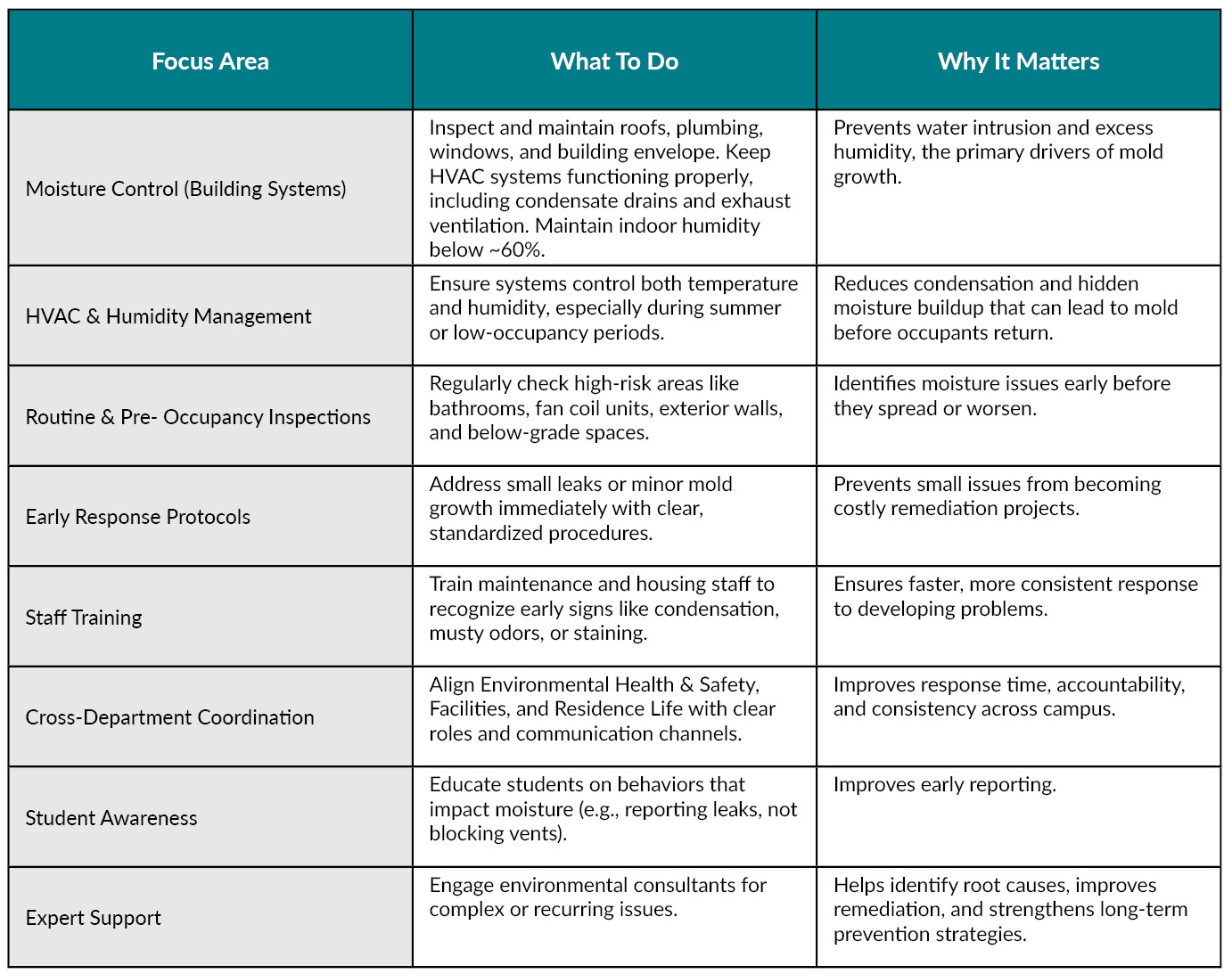
Ultimately, the most effective strategy is not simply responding to mold when it appears but addressing the conditions that allow it to develop in the first place. Shifting to a more proactive, preventive approach can significantly reduce both the frequency and severity of mold-related issues.
A key component of preventing mold in student housing buildings is coordination across departments. Facilities management, EHS, and resident life groups all play a role in managing dormitory conditions. When these groups operate with clearly defined responsibilities and strong communication channels, issues are more likely to be identified early and addressed consistently.
In-house measures can also make a meaningful difference. Training maintenance and housing staff to recognize early signs of moisture or mold growth allows for quicker intervention. Establishing clear protocols for handling small, isolated areas of mold helps prevent unnecessary escalation, while routine inspections of high-risk areas, such as below ground level rooms, HVAC units, and exterior walls, can catch developing problems before they spread. Maintaining HVAC systems, supplemental dehumidification, and monitoring indoor humidity levels, particularly during seasonal transitions, are also critical components of an effective prevention strategy.
For more complex or persistent challenges, many universities and colleges benefit from working with a trusted third-party partner. A firm with expertise in both industrial hygiene and building systems can pinpoint the root cause and provide more effective remediation solutions. A mold assessment would allow for more accurate identification of root causes, more effective remediation planning, and clearer communication around potential health concerns. Third-party support can also be instrumental in developing long-term mold management programs that align with institutional goals and risk tolerance.
Mold Prevention in College Dorms: Key Strategies
From Reactive Response to Proactive Management
Mold in dormitories rarely is an isolated issue. In most cases, it reflects underlying moisture and building performance challenges that, if left unaddressed, will continue to reoccur. Institutions that invest in preventive maintenance, clear response protocols, and cross-departmental coordination are better positioned to reduce mold incidents and maintain confidence in campus housing.
Solving mold issues for the long term requires an integrated approach using both environmental science and building system expertise. Mold problems don’t get resolved unless the root cause is addressed. Connect with our team to get ahead of the issue with a solution that protects your campus infrastructure and the health of your students.





Subscribe
to our blog
"*" indicates required fields