Hospital Water Systems Risk Assessments: The Foundation of Effective Water Management
Key Highlights
- Every healthcare facility has complex water systems and unique water quality profiles, requiring a comprehensive, tailored water systems risk assessment to pinpoint specific local vulnerabilities.
- A water systems risk assessment cannot rely on a document review alone; it must combine a thorough document review, a physical inspection of the water systems, and staff interviews.
- The CDC’s WICRA tool is vital for evaluating patient exposure at end-use fixtures, but it must be paired with a systems-based assessment to uncover the root infrastructure risks where waterborne pathogens can actually grow and spread.

9 Minute Read

Hospital water systems are essential to patient care, but they can also become hidden pathways for Legionella and other pathogenic and opportunistic waterborne pathogens when risks go unnoticed. In hospitals, water moves through miles of piping, storage tanks, heaters, cooling systems, medical equipment, sinks, showers, and patient care areas every day. A comprehensive, facility-specific water systems risk assessment is what turns that complex system from a potential blind spot into a manageable patient-safety priority.
Since 2017, the Centers for Medicare & Medicaid Services (CMS) has required healthcare facilities to develop water management programs to help reduce the risk of pathogens. In response, hospitals have developed water management plans to improve oversight of building water systems. Hospital facilities, however, continue to struggle with shortcomings in water management: the Centers for Disease Control and Prevention (CDC) estimates that about nine out of ten Legionnaires’ disease outbreaks are associated with preventable problems in building water systems.
The challenge is not just having a water management plan but ensuring that the plan is built on a thorough understanding of the facility’s unique risks. Too often, hospital water systems risk assessments are incomplete and perfunctory overviews rather than comprehensive evaluations of how water moves through and is used within a hospital. Effective water management begins before a written plan is developed. It starts with a comprehensive water systems risk assessment that examines plumbing infrastructure in addition to how water is used throughout the hospital environment to identify hidden vulnerabilities that could create infection risks.
What Is a Hospital Water Systems Risk Assessment?
An effective hospital water systems risk assessment is a structured, facility-specific evaluation of the facility’s entire water system that identifies conditions that could contribute to the growth and spread of waterborne pathogens. The process evaluates both the infrastructure and water use, recognizing that systemic vulnerabilities and operations can each foster pathogen growth and increase exposure risks throughout the hospital. The assessment examines how water enters, moves through, is stored within, heated, distributed, and ultimately used throughout the hospital environment.
For water management plans, these assessments are a foundational component and are intended to identify and mitigate vulnerabilities to prevent patient exposure or disease transmission. The process includes reviewing system documentation and historical sampling data, physically evaluating plumbing infrastructure and water equipment, interviewing staff about maintenance and operational practices, and assessing how water is used in patient care areas and medical equipment.
A useful way to think about a water systems risk assessment is to compare it to a comprehensive medical physical. General wellness advice such as eat healthy, exercise, get enough sleep is important, but it does not replace a detailed medical evaluation. A physician still needs to measure blood pressure, review lab work, evaluate symptoms, and identify risks specific to the individual patient before recommending the right course of action
Hospital water management works the same way. Generic guidance and best practices are helpful, but they are not enough on their own. Every healthcare facility has different plumbing configurations, equipment, operational practices, patient populations, and water use patterns. A detailed hospital water systems risk assessment identifies the vulnerabilities unique to that specific hospital so the organization can develop targeted mitigation strategies rather than relying on one-size-fits-all recommendations.
Why Many Water Risk Assessments Fall Short
Often hospitals lack the specialized in-house expertise to conduct a robust water systems risk assessment, the vendor selected is not properly qualified, or the risk assessment is perfunctory. Consequently, the resulting assessments are frequently cursory and incomplete. In these cases, the process yields generic recommendations that fail to address the facility’s unique risk factors.
Detailed risk assessments matter: many risks are not obvious until a qualified professional physically evaluates the systems and operational practices. For instance, hot water heater temperature management is an example of how managing risk is highly dependent on understanding the specific systems within a facility. Some facilities have thermostatic mixing valves while others do not, and the correct temperature strategy depends on the infrastructure in place. A generic recommendation to keep water heaters at a certain temperature could inadvertently create scalding risks if applied incorrectly.
Limited physical inspection, insufficient review of operational practices, lack of staff interviews, and failure to verify that control measures are consistently implemented can all leave important vulnerabilities undiscovered. As a result, organizations may believe risks are being effectively managed when critical infrastructure, maintenance, or water-use issues remain unaddressed.
Common Water System Vulnerabilities Found in Hospitals
In evaluating numerous hospital water systems over the years, our assessments highlight a recurring set of common vulnerabilities that often go unnoticed. Among the most significant are issues involving hot water systems, which are one of the biggest single vulnerabilities in hospitals, particularly as it relates to Legionella growth.
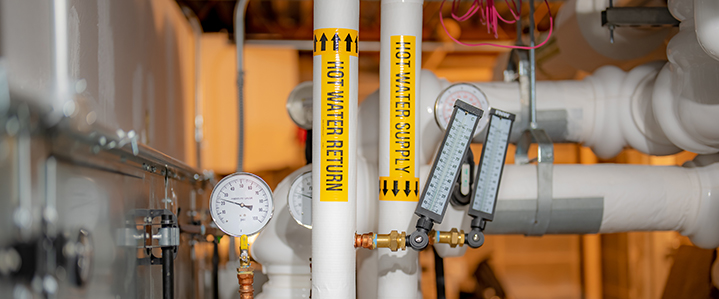
Water systems often are implicated in conditions that support the growth and spread of waterborne pathogens. Common findings include failure to maintain appropriate temperatures throughout the entire hot water distribution system, inadequate recirculation, and the absence of properly located thermometers needed to verify system performance. Without adequate monitoring and control, portions of a hot water system may operate within temperature ranges that promote microbial growth.
Assessments routinely identify infrastructure and operational issues that contribute to water stagnation and reduce water quality. Dead legs, underused outlets, infrequently used showers, and other low-flow areas can create conditions favorable to biofilm formation and pathogen amplification. Poorly managed cross-connects may introduce additional contamination risks, while flushing programs are often found to be incomplete, inconsistently performed, or inadequately documented.
Other common findings include improper chlorine monitoring practices, charcoal filters on ice machines that may harbor microbial growth, and automatic fixtures that create stagnation/low flow, and insufficient residual disinfectant from the municipal supply. Some of these issues can take resources to solve, but each one deserves attention because small vulnerabilities can compound across a hospital water system. Individually, these vulnerabilities may appear minor, but together they can significantly increase the likelihood of waterborne pathogen growth and transmission if left unaddressed.
What a Comprehensive Water Systems Risk Assessment Should Include
The water systems risk assessment should drive the water management plan because it does more than document the components of a hospital’s plumbing system. A thorough assessment looks under the hood to understand how water moves through the facility, how it is used, and where conditions may exist that could support the growth or transmission of waterborne pathogens. That level of understanding requires three complementary activities: document review, onsite physical evaluation of all water systems, and interview with the people responsible for managing the system every day.
Start with the Available Information
Before walking the water systems, review existing documentation to develop an understanding of the facility’s water systems and any known concerns. This may include:
- Plumbing drawings and system schematics
- Water sampling results
- Preventative maintenance records
- Existing mitigation measures and corrective actions
- Water management plan and system descriptions
These records help establish a baseline understanding of the system and can highlight recurring issues, the historical pattern of water quality concerns, or areas that may warrant closer inspection.
Evaluate How the System Functions in Practice
Drawings and records rarely tell the whole story. Hospitals constantly evolve over time with new or rehabbed construction and water systems are often modified over time. As a result, a comprehensive assessment requires a physical inspection of the facility to evaluate how systems actually operate and if there are any hidden water system vulnerabilities. Areas that should be evaluated include:
- Incoming water supplies
- Water heaters and storage tanks
- Hot water distribution systems and recirculation loops
- Cooling towers
- High-purity water systems
- Cross-connects and backflow prevention devices
- Dead legs and other potential stagnation points
- End-use outlets, including sinks, showers, and ice machines
- Higher vulnerability water system components such as automatic faucets and standard aerators
These inspections often reveal issues that would never appear in a maintenance record or plumbing diagram, such as underused fixtures, stagnant water zones, improperly functioning equipment, or undocumented system modifications.
Understand Daily Operations
If practices are inconsistent, even a well-designed system can become vulnerable. For that reason, interviews with facilities staff, infection prevention personnel, and others involved in water management are a critical part of the assessment process. Discussions often focus on:
- Flushing programs
- Preventive maintenance activities
- Water quality monitoring
- Water used in medical equipment (e.g., heater cooler units)
- Corrective action procedures
- Responses to shutdowns, low-use areas, or other system disruptions
These conversations help verify whether written procedures are being implemented as intended but they often uncover operational challenges that are not evident through document review or physical inspection alone. Taken together, these activities provide a much more complete understanding of risk than any single approach could achieve on its own. When document review, field evaluation, or operational verification is overlooked, important vulnerabilities can remain hidden. In healthcare environments, those overlooked vulnerabilities can have significant implications for patient safety.
Some healthcare organizations use CDC’s Water Infection Control Risk Assessment (WICRA) tool as part of their water management efforts. WICRA focuses on how water is used within specific patient care areas and helps evaluate patient exposure risks based on factors such as patient vulnerability, fixture types, and water-use practices. This makes it particularly useful for identifying higher-risk units and prioritizing protective measures for hospital water safety.
CDC’s WICRA tool is valuable, but it is only one piece of the larger water management picture. While WICRA focuses on patient exposure points (e.g., showers, ice machines), a water systems-based assessment identifies the conditions that allow waterborne pathogens to grow and spread in the first place. Hospitals need both perspectives: one to understand where patient exposure could occur and the other to identify and then address the infrastructure and operational factors that create the risk.
Grounding Water Management in Comprehensive Systems-Based Risk Assessment
A hospital water management plan cannot protect patients from risks it has not identified. That is why the water systems risk assessment behind the plan is so vital. A comprehensive water systems risk assessment turns a complex hospital water system into a clear set of priorities by identifying facility-specific vulnerabilities in infrastructure, operations, maintenance practices, and water use that generic assessments often miss.
If your organization is evaluating its water management program, EH&E can help turn assessment findings into practical action. Our healthcare water management specialists conduct comprehensive, facility-specific risk assessments that uncover hidden vulnerabilities, strengthen compliance efforts, and support patient safety. After the assessment, our team can translate the findings into a roadmap to address those risks, deliver a customized water management plan and support your hospital through implementation.




Subscribe
to our blog
"*" indicates required fields